
Blog
Acne-Prone Skin: Causes & Daily Care Tips

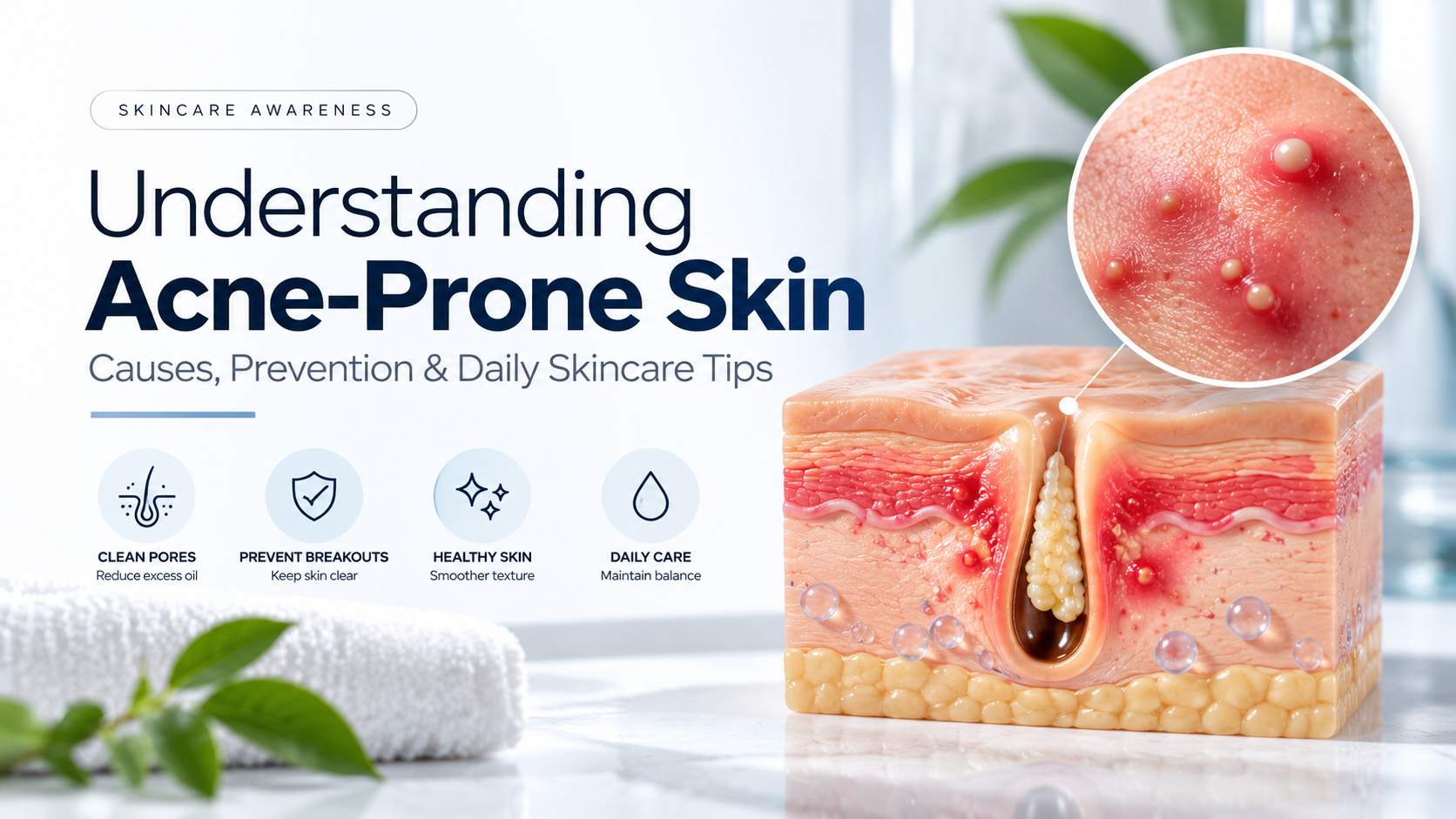
A Skincare Awareness Guide by FILIX PHARMA
Healthy-looking skin begins with understanding your skin’s needs. Acne is one of the most common skin concerns, affecting teenagers and adults worldwide. Although breakouts can be frustrating, developing a consistent skincare routine and understanding common triggers can help you manage acne-prone skin more effectively.
At FILIX PHARMA, we believe that skincare awareness is an important part of building healthy daily habits.
Acne is a common skin condition that develops when hair follicles become clogged with excess oil (sebum) and dead skin cells. Bacteria and inflammation may also contribute to breakouts.
What Is Acne and Why Does It Occur?
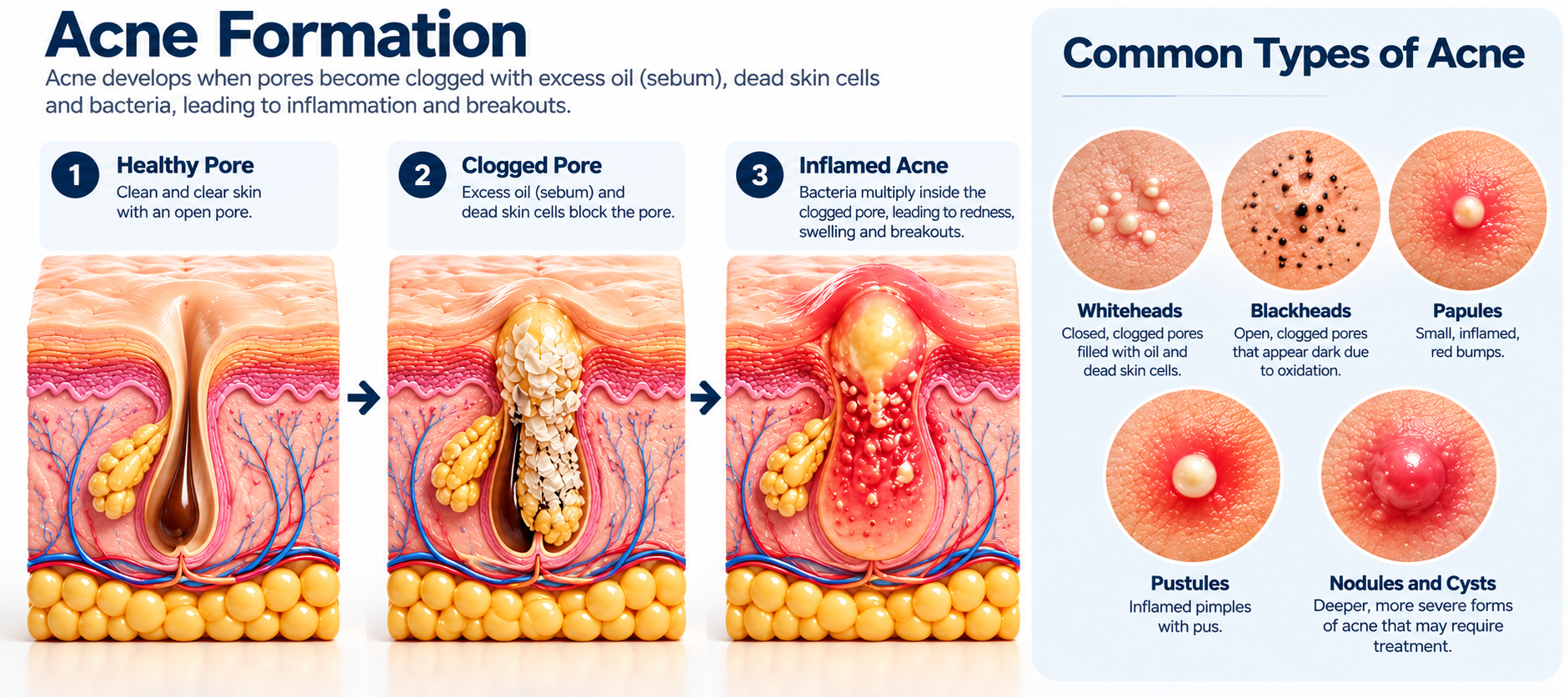
Acne can appear in several forms, including:
- Whiteheads: Closed, clogged pores.
- Blackheads: Open, clogged pores that appear dark due to oxidation.
- Papules: Small, inflamed bumps.
- Pustules: Inflamed pimples containing pus.
- Nodules and cysts: Deeper forms of acne that may require professional treatment.
Acne commonly develops on the face, chest, shoulders and back.
5 Common Causes of Acne
1. Excess Oil Production
Sebaceous glands naturally produce oil to protect and lubricate the skin. When excess oil combines with dead skin cells, pores may become clogged.
2. Hormonal Changes
Hormonal fluctuations during puberty, menstrual cycles and other life stages can influence oil production and contribute to acne.
3. Inappropriate Skincare Products
Certain heavy or pore-clogging skincare and cosmetic products may worsen breakouts in acne-prone individuals.
4. Stress and Lifestyle Factors
Stress does not directly cause every case of acne, but it may aggravate existing breakouts. Sleep habits and individual dietary triggers may also influence skin health.
5. Inconsistent Skincare Habits
Failing to remove makeup, using harsh cleansers or frequently changing skincare products may irritate the skin and make acne management more difficult.
Why Is Daily Facial Cleansing Important?
Facial cleansing is a basic but essential step in a balanced skincare routine.
Throughout the day, the skin accumulates excess oil, sweat, dirt and environmental impurities. Gentle cleansing helps remove these substances without unnecessarily disrupting the skin’s natural protective barrier.
Benefits of a suitable cleansing routine include:
- Removing excess surface oil and impurities.
- Washing away sweat and everyday buildup.
- Preparing the skin for moisturizer and other skincare products.
- Supporting comfortable, refreshed-feeling skin.
- Maintaining a consistent daily skincare routine.
However, cleansing alone does not treat every cause of acne. Persistent or severe breakouts may require targeted acne treatment.
Introducing Softenn Face Wash by FILIX PHARMA
A consistent cleansing routine begins with selecting a face wash suitable for your skin type.
Softenn Face Wash by FILIX PHARMA is part of the brand’s skincare range and can be considered when building a daily facial cleansing routine.
When choosing a cleanser, it is important to review its ingredients, directions for use and suitability for your individual skin concerns.
For acne-prone skin, dermatologists commonly recommend gentle cleansing rather than aggressive scrubbing.
Product-specific benefits and active-ingredient claims should be confirmed against the official Softenn Face Wash formulation and packaging.
Daily Skincare Tips for Acne-Prone Skin
Morning Routine
Step 1: Cleanse
Wash your face gently using a suitable facial cleanser and lukewarm water.
Step 2: Moisturize
Apply a lightweight, non-comedogenic moisturizer to help maintain skin hydration.
Step 3: Protect
Use a broad-spectrum sunscreen with SPF 30 or higher to protect your skin from ultraviolet radiation.
Evening Routine
Step 1: Remove Makeup and Sunscreen
Gently remove makeup and sunscreen without excessive rubbing.
Step 2: Cleanse
Use a suitable face wash to remove accumulated impurities.
Step 3: Apply Recommended Treatment
If you use an acne treatment prescribed or recommended by a healthcare professional, follow the provided instructions.
Step 4: Moisturize
Finish with a moisturizer appropriate for your skin type.
Common Skincare Mistakes to Avoid
Even with good intentions, certain habits may make acne-prone skin more irritated.
- Overwashing: Washing too frequently may cause dryness and irritation.
- Harsh scrubbing: Excessive friction can aggravate inflamed skin.
- Picking pimples: This may increase the risk of scarring and discoloration.
- Skipping moisturizer: Oily skin can still benefit from appropriate hydration.
- Expecting overnight results: Improvements in acne often require several weeks of consistent care.
When Should You Consult a Dermatologist?
Professional advice is recommended if you experience painful or deep acne, persistent breakouts, scarring, or acne that does not improve with appropriate skincare.
A dermatologist can help identify your acne type and recommend suitable treatment options.
Conclusion: Healthy Skin Starts With Consistent Care
Managing acne-prone skin does not require an unnecessarily complicated routine. Understanding your skin, choosing suitable products, practicing gentle cleansing and maintaining consistent habits can make a meaningful difference.
FILIX PHARMA encourages informed skincare choices through awareness, education and responsible product use.
Explore Softenn Face Wash and discover the FILIX PHARMA skincare collection.
Website: https://www.filix.com.pk/
Frequently Asked Questions (FAQs)
1. What causes acne on the face?
Acne develops when hair follicles become clogged with oil and dead skin cells. Hormonal changes, inflammation and bacteria can also contribute.
2. How often should acne-prone skin be washed?
Most people benefit from gently cleansing their face twice daily and after heavy sweating. Overwashing may irritate the skin.
3. Can face wash completely cure acne?
No. A face wash helps remove surface impurities and excess oil, but acne may require additional treatment depending on its severity and underlying causes.
4. Should oily skin use moisturizer?
Yes. Oily skin still needs hydration. A lightweight, non-comedogenic moisturizer is often a suitable choice.
5. Can acne-prone skin use sunscreen?
Yes. Daily broad-spectrum SPF 30 or higher sunscreen is recommended. Look for products labeled non-comedogenic or suitable for acne-prone skin.
6. How long does it take for an acne skincare routine to show results?
Results vary. Acne treatments commonly require approximately six to eight weeks before noticeable improvement, and some cases take longer.
7. Is Softenn Face Wash suitable for daily use?
Follow the instructions on the official Softenn Face Wash packaging. Suitability and frequency depend on its formulation and your skin’s tolerance.
Disclaimer: This article is intended for general skincare education and does not replace professional medical advice. Individual skin needs and treatment responses may vary.